-e1742971339568.png)
China Atlas
Harbin, read through culture and daily life.
Northeastern winter, ice architecture, Russian-influenced streets, hearty food, music memory, and cold-weather city theater.
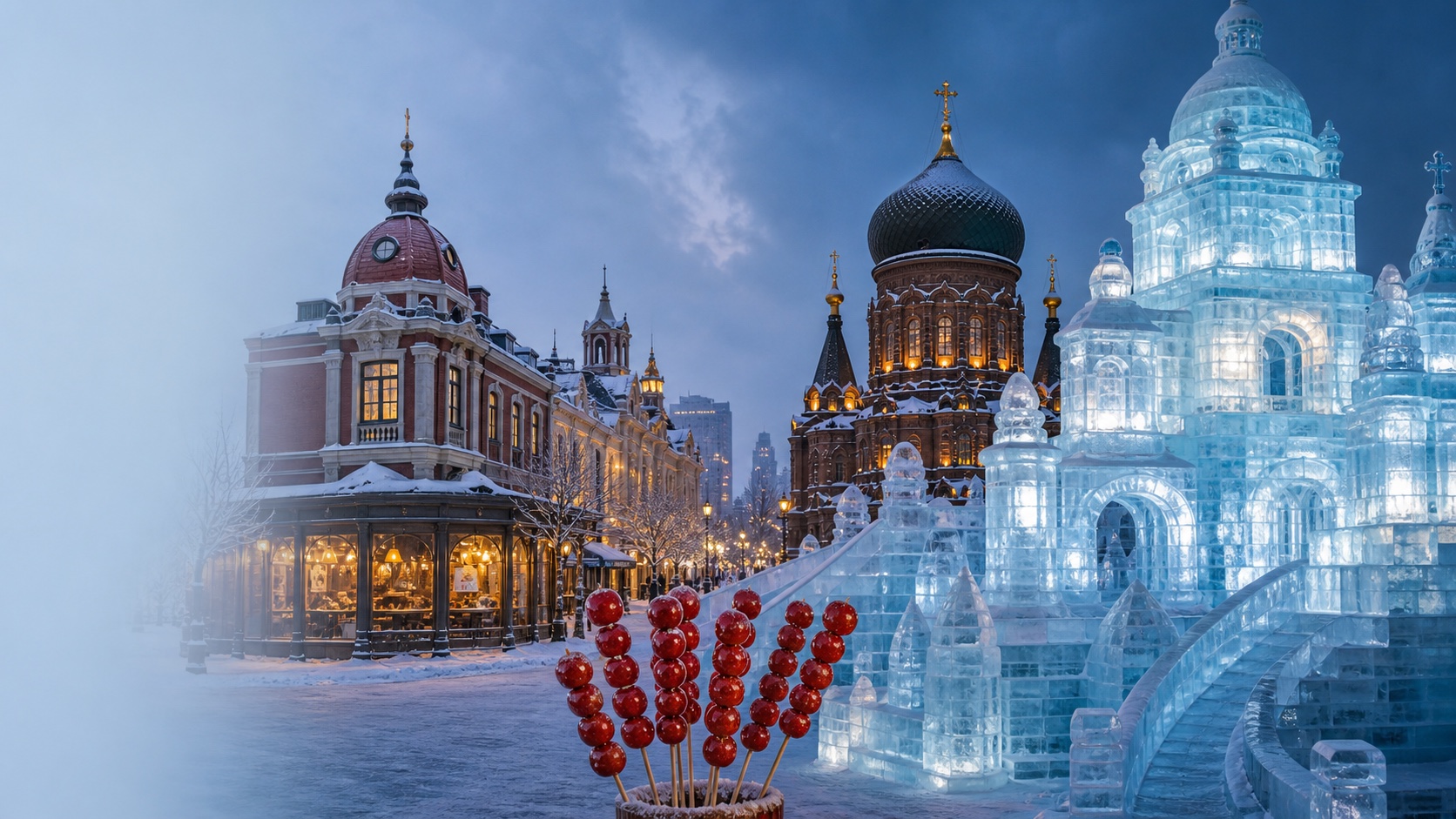
Harbin in visible scenes
The city page starts with things readers can see: streets, food, objects, architecture, symbols, and everyday pace.
Cultural Character
A northern city shaped by winter spectacle
Harbin’s ChinaWink value is not a checklist; it is ice as public art, architecture as memory, and food as warmth.

Visual Language
Ice, domes, long streets, and glowing nights
Notice snow color, frozen surfaces, onion domes, European street rhythm, and the contrast between outdoor cold and indoor warmth.
Food Memory
Hearty northeastern comfort
Guobaorou, dumplings, stews, smoked sausage, Russian-style bread, and candied hawthorn make climate visible on the table.

Seasonal Meaning
Winter as identity, not only weather
Harbin shows how a season can become civic branding, family memory, night economy, and visual culture.
Quick cultural frame
A compact answer layer for readers and generative engines before the visual story gets deeper.
Reader job: decide what Harbin helps you understand
Use this city page to choose a cultural angle, not just a place name. Harbin should connect scenery, food, objects, memory, and modern daily rhythm into one readable setting.
| If you want to understand | Use this city for | What to notice |
|---|---|---|
| Visual character | Northern winter, ice, architecture, and cross-border texture | Ice forms, Central Street, Saint Sophia silhouettes, bread, sausage, stews, fur hats, and snow-bright nights. |
| Daily rhythm | The city’s character sharpens in cold air: bright lights, warm interiors, slow meals, and streets that become seasonal stages. | Food timing, street pace, public space, neighborhood texture, and how people move. |
| Cultural memory | Read Harbin through ice, brick, bread, music, snow light, and the contrast between cold streets and warm rooms. | Architecture, local terms, museum clues, craft details, and recurring symbols. |
Common mistakes
- Reading the city only as a route list instead of a cultural container.
- Ignoring food, objects, streets, and everyday pace because the famous landmark is louder.
- Assuming the city explains all of China instead of one regional voice.
Related entities to connect
Harbin, local food, landmark forms, street rhythm, regional climate, craft materials, public space, and the wider ChinaWink themes of culture, food, objects, scenery, and modern life.
Read Harbin through four layers
Each city page now acts as a cultural container: visual language, food memory, objects, scenery, and modern daily rhythm.
Cultural Character
A northern city shaped by winter spectacle
Harbin’s ChinaWink value is not a checklist; it is ice as public art, architecture as memory, and food as warmth.Visual Language
Ice, domes, long streets, and glowing nights
Notice snow color, frozen surfaces, onion domes, European street rhythm, and the contrast between outdoor cold and indoor warmth.Food Memory
Hearty northeastern comfort
Guobaorou, dumplings, stews, smoked sausage, Russian-style bread, and candied hawthorn make climate visible on the table.Seasonal Meaning
Winter as identity, not only weather
Harbin shows how a season can become civic branding, family memory, night economy, and visual culture.Connect this city to the content atlas
Nature & Scenery
Mountains, rivers, gardens, old towns, seasonal color, and the visual language of Chinese landscapes.
Food & Tea
Chinese tea, regional cuisines, street food, breakfast habits, ingredients, and the culture carried by flavor.
Culture
Festivals, opera, mythology, writing, customs, symbols, and the living details behind Chinese identity.
Craft & Finds
Porcelain, lacquer, silk, tea ware, calligraphy tools, paper cutting, and beautiful everyday objects.