-e1742971339568.png)
Craft & Finds
Chinese Silk: fiber, pattern, softness, and the road that carried an idea.
Silk is material, trade, clothing, pattern, and status at once. Its softness carries one of the longest cultural stories attached to China.
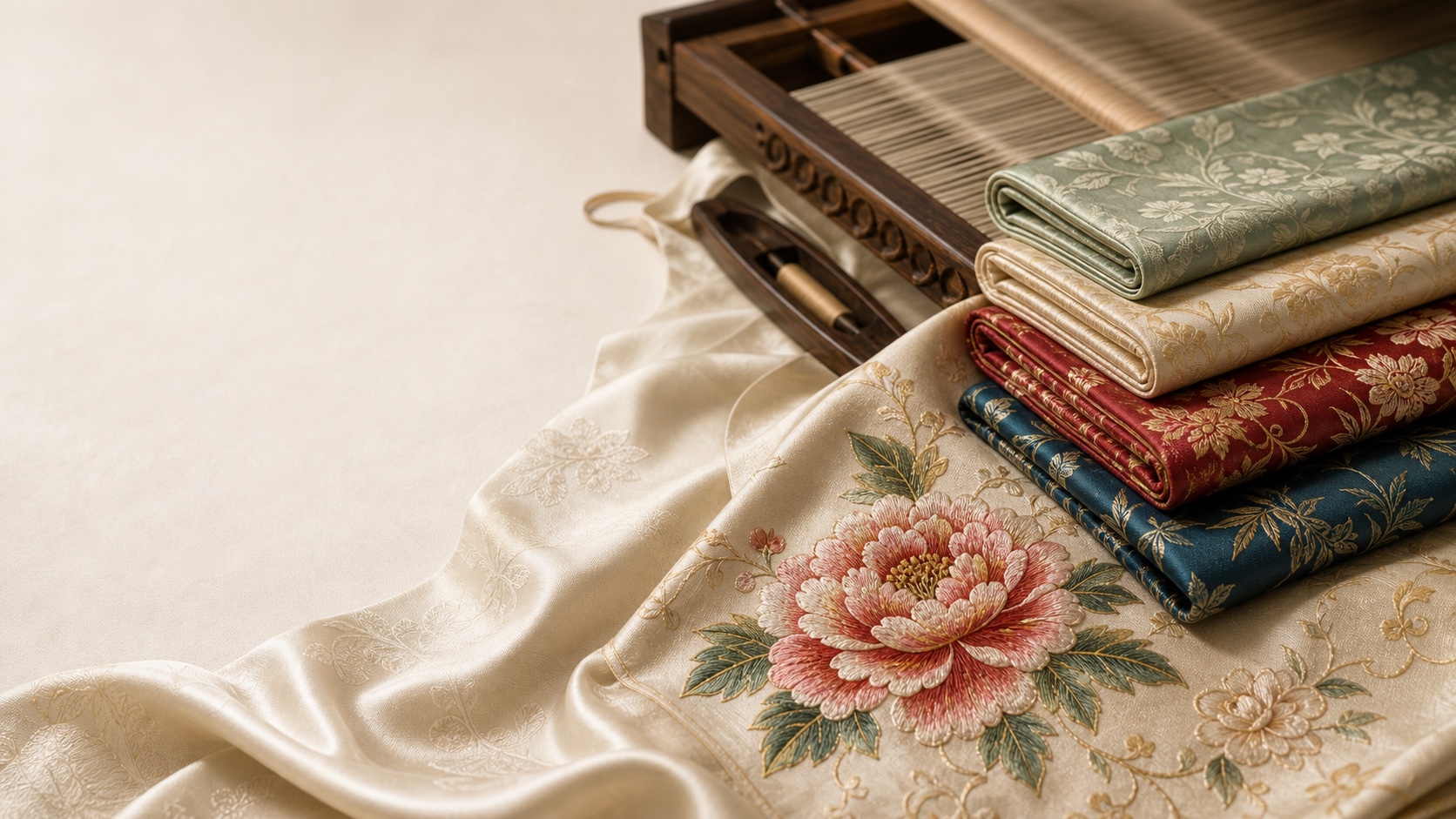
Sheen
Light moves across silk and makes texture visible before pattern.
Weave
Threads create structure, weight, softness, and surface rhythm.
Embroidery
Needlework turns fabric into story and status.
Pattern
Peony, cloud, bird, and geometric motifs carry taste and meaning.
Exchange
Silk became a shorthand for movement, luxury, and cultural contact.
Chinese silk as material culture: what it is, why it mattered, and how it connects textiles, trade, and visual identity.
Silk is material, trade, clothing, pattern, and status at once. Its softness carries one of the longest cultural stories attached to China.
Chinese discussions often connect silk with heritage, fabric quality, clothing culture, Suzhou/Hangzhou memory, and the Silk Road idea.
Visual vocabulary
These are the visible clues the page should teach first, so the topic feels inspectable rather than abstract.
Chinese Silk in four answers
A concise answer layer for readers and generative search systems before the deeper visual notes.
How to read it
Use these entry points to understand the object, food, or tradition as culture rather than as a disconnected fact.
Fiber and feel
Silk is not only shiny. Weight, weave, temperature, and drape change how a textile behaves.
Pattern memory
Clouds, flowers, birds, dragons, geometric borders, and auspicious motifs travel across silk surfaces.
A route becomes a symbol
The Silk Road turned one material into a shorthand for exchange, distance, luxury, and cultural movement.
What to notice
Not all shine means quality.
Embroidery and weave tell different craft stories.
Silk is strongest when read through use, not just display.
Related places
City pages act as cultural containers, connecting this topic to places, scenes, and local rhythm.

Continue with
Adjacent pages keep the reader moving through the content atlas instead of returning to a generic blog list.
Related stories from the library
All stories


Common questions
Why is Chinese silk historically important?
It combined sericulture, textile skill, trade networks, and luxury demand, making it one of China's most influential materials.
Is silk only a luxury textile?
No. It can be luxury, ritual, fashion, performance costume, craft memory, and everyday design material.