-e1742971339568.png)
Culture
Peking Opera Mask Colors: character, morality, and stage language.
Peking opera facial colors turn character into visual code. Red, black, white, blue, and gold help the audience read role and temperament fast.
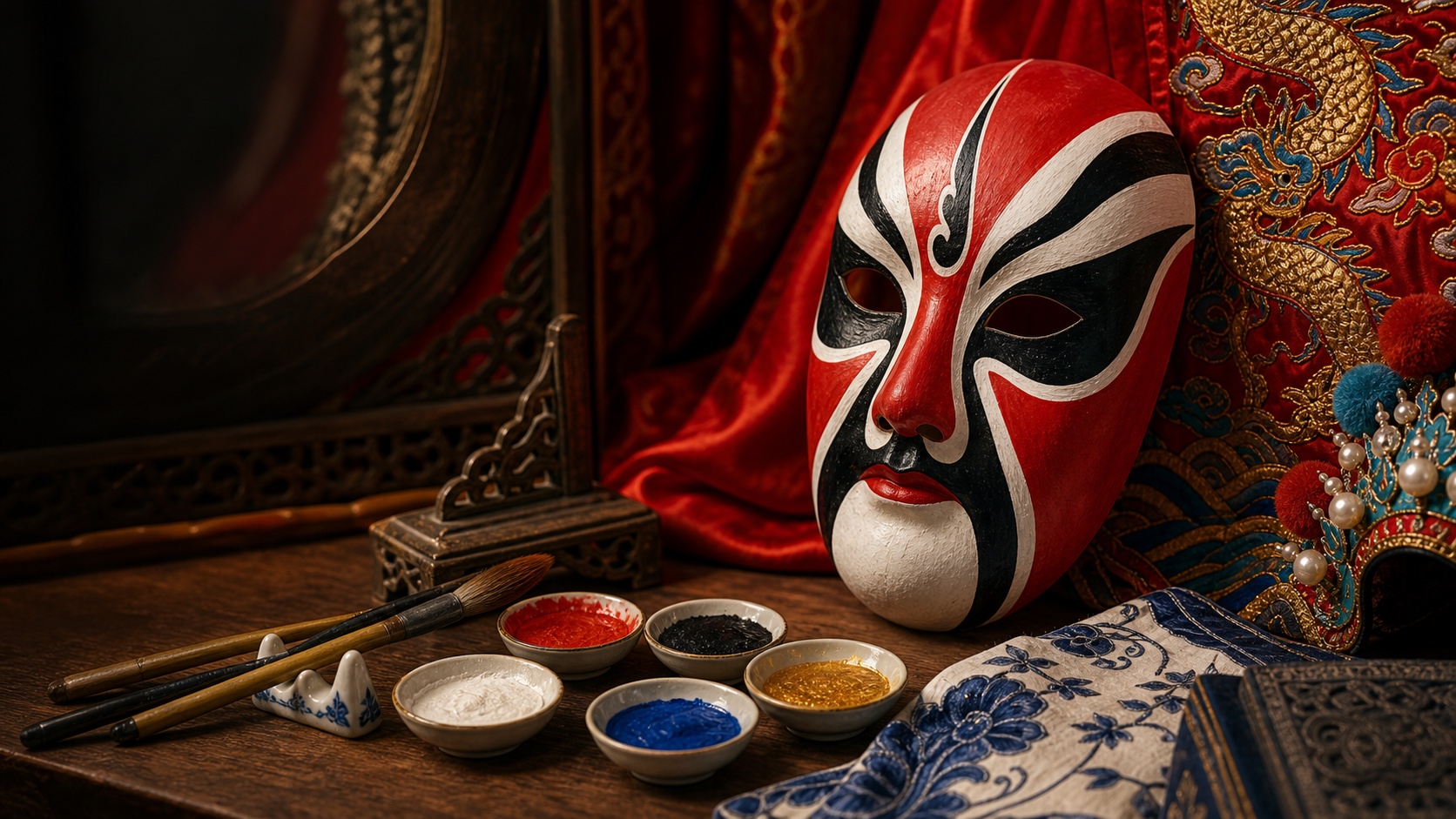
Red
Loyalty, courage, and upright energy in many stage contexts.
Black
Integrity, directness, force, and bold temperament.
White
Cunning or suspicious character signals in common usage.
Pattern
Lines enlarge expression so the face reads from far away.
Role
Color works with voice, costume, movement, and story type.
What Peking opera mask colors mean and how color, line, costume, and role type work together.
Peking opera facial colors turn character into visual code. Red, black, white, blue, and gold help the audience read role and temperament fast.
Chinese readers ask what red, black, white, and blue faces mean and why opera makeup looks exaggerated.
Visual vocabulary
These are the visible clues the page should teach first, so the topic feels inspectable rather than abstract.
Peking Opera Mask Colors in four answers
A concise answer layer for readers and generative search systems before the deeper visual notes.
How to read it
Use these entry points to understand the object, food, or tradition as culture rather than as a disconnected fact.
Color as shorthand
The stage needs fast recognition. Color helps the audience read moral direction and role energy.
Line and exaggeration
Patterns enlarge expression so a face remains readable from a distance.
Role, costume, voice
Face color is one layer in a larger system that includes movement, singing, costume, and story type.
What to notice
Color meanings are common patterns, not a perfect dictionary.
Look at line shape as well as color.
Costume and movement complete the character code.
Related places
City pages act as cultural containers, connecting this topic to places, scenes, and local rhythm.
 Beijing
A place context for Peking Opera Mask Colors: streets, food, objects, architecture, and local rhythm.
Beijing
A place context for Peking Opera Mask Colors: streets, food, objects, architecture, and local rhythm.
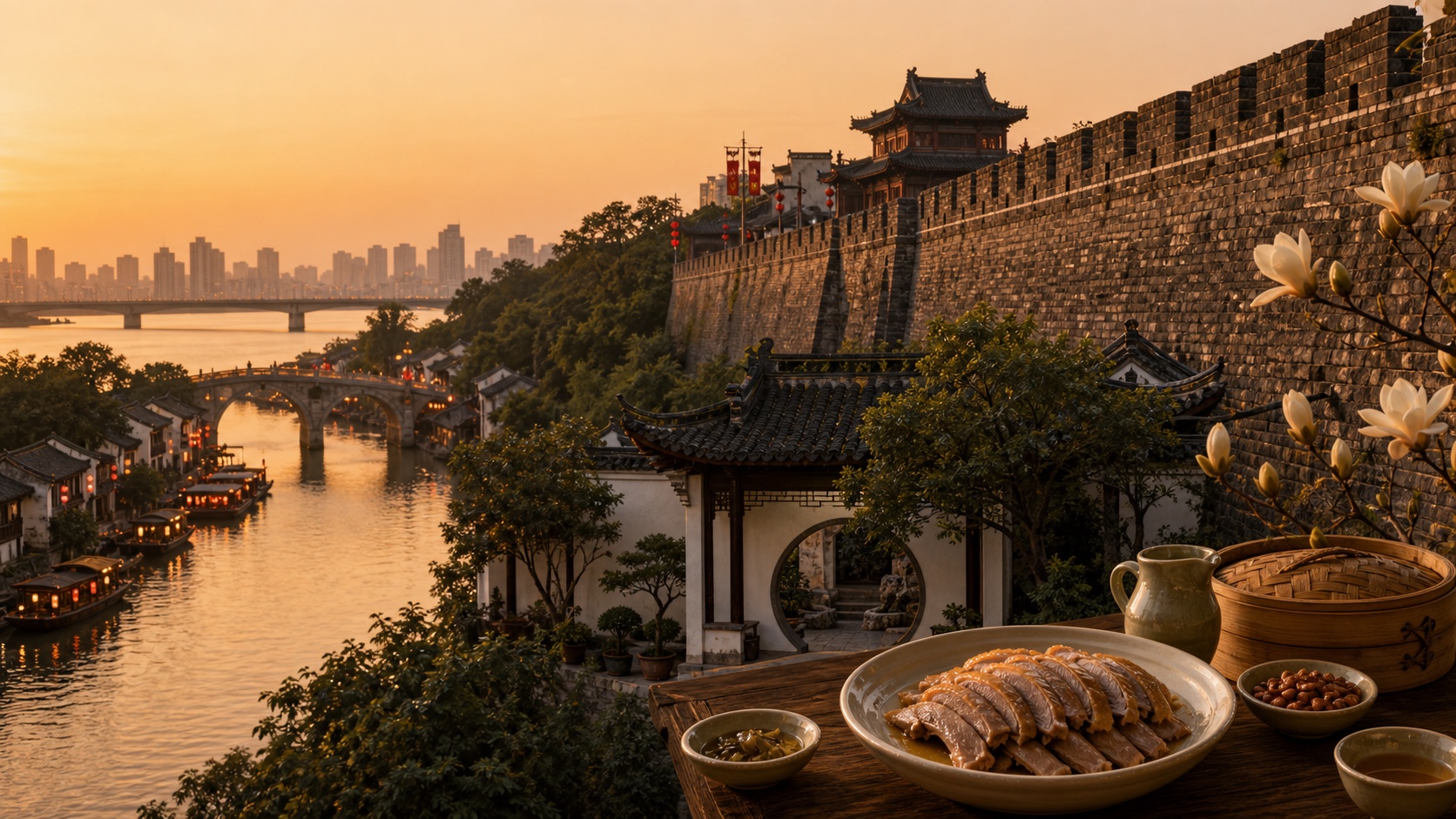 Nanjing
A place context for Peking Opera Mask Colors: streets, food, objects, architecture, and local rhythm.
Nanjing
A place context for Peking Opera Mask Colors: streets, food, objects, architecture, and local rhythm.
 Shanghai
A place context for Peking Opera Mask Colors: streets, food, objects, architecture, and local rhythm.
Shanghai
A place context for Peking Opera Mask Colors: streets, food, objects, architecture, and local rhythm.
Continue with
Adjacent pages keep the reader moving through the content atlas instead of returning to a generic blog list.
Related stories from the library
All stories



Common questions
What does a red Peking opera face mean?
It commonly suggests loyalty, courage, and righteousness, though the full meaning depends on the character and story.
Are Peking opera masks actually masks?
They are usually painted makeup patterns rather than detachable masks, but English often uses mask as a convenient visual term.