-e1742971339568.png)
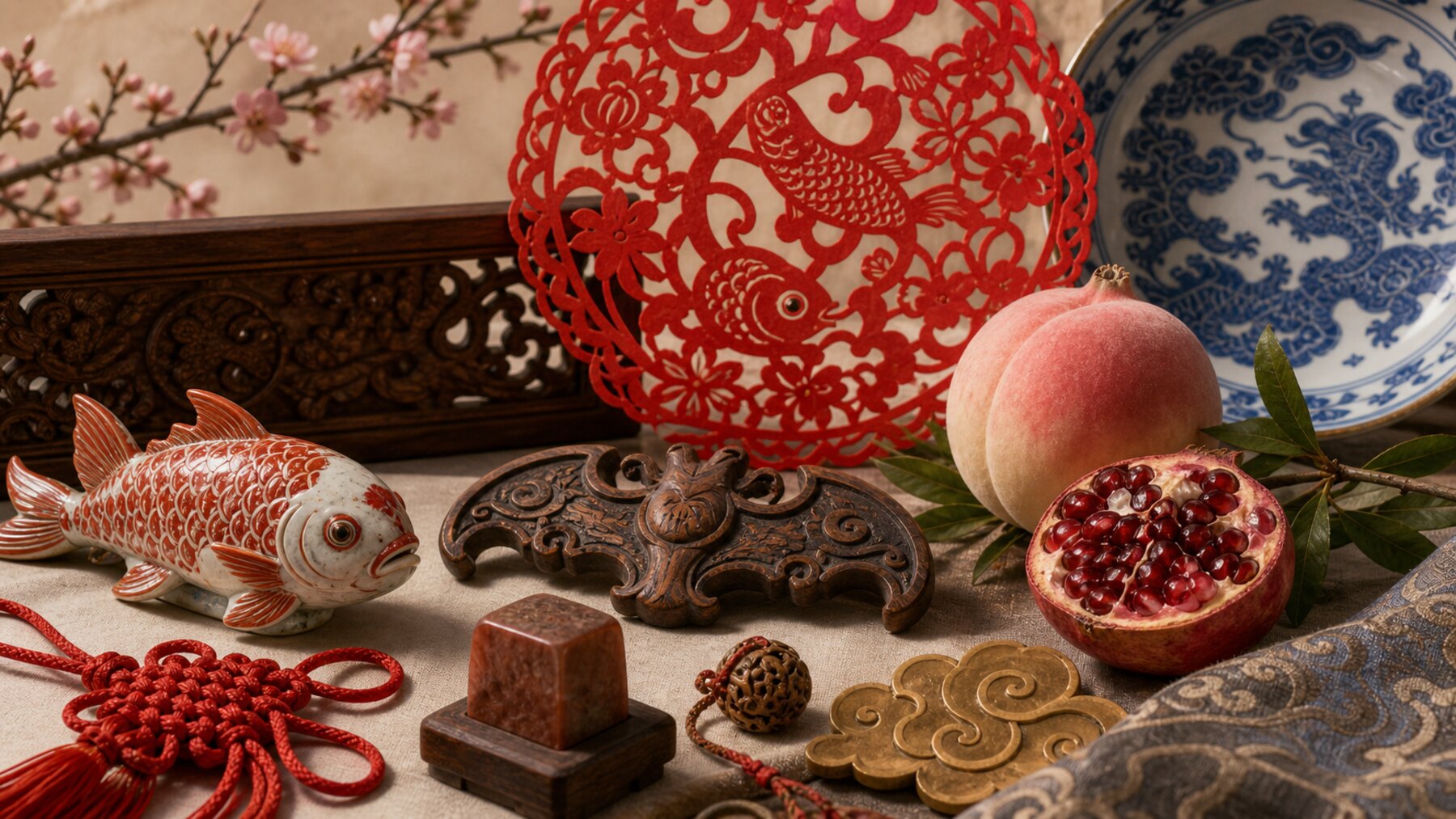
Chinese auspicious symbols work like a visual language. A fish can point to abundance, a bat can suggest blessing, a peach can signal longevity, and the character fu can turn a doorway into a New Year wish. Once you learn the basics, temples, homes, shops, gardens, packaging, and souvenirs become easier to read.

Why symbols matter
Auspicious design turns hopes into visible form: health, wealth, harmony, long life, children, success, safety, and reunion. These symbols appear at festivals, weddings, birthdays, business openings, temple fairs, home decorations, and gifts.
Core symbols to know
- Fu: blessing or good fortune, often displayed during Lunar New Year.
- Shou: longevity, common on birthday objects and decorative art.
- Fish: abundance because fish and surplus sound connected in Chinese.
- Peony: wealth, beauty, and high status.
- Bat: blessing because the word sounds like good fortune.
- Gourd: protection, health, and containment of good energy.
- Pine and crane: long life and endurance.
- Pomegranate: many seeds, often connected with family continuity.
Color and placement
Red often signals celebration, protection, and good fortune, especially around New Year. Gold can suggest wealth or brightness. Placement matters too: symbols on doors, windows, clothing, jewelry, food packaging, and architecture serve different social jobs.
Where travelers see them
Look at temple carvings, garden windows, roof decorations, red envelopes, festival lanterns, tea packaging, embroidery, porcelain, woodblock prints, and museum objects. Many souvenirs use these symbols, but better items explain craft and context rather than only printing a lucky image.
Do not overtranslate
Symbols are flexible. A lotus can suggest purity, summer, Buddhism, or elegance depending on context. A dragon can be imperial, festive, or decorative. A single symbol rarely has only one fixed meaning. Read it with place, material, occasion, and neighboring motifs.
How to choose a meaningful gift
- For elders: longevity symbols such as shou, peach, pine, or crane can fit.
- For New Year: fu, fish, zodiac animals, and red paper cuts are common.
- For home decor: choose restrained craft rather than loud lucky clutter.
- For friends: explain the meaning in a note so the symbol travels with context.
Related ChinaWink reads
For animal symbolism, read the Chinese zodiac guide. For dragon imagery, continue with the Xianglong dragon guide.
Keep exploring ChinaWink
For broader planning, use the China visitor guide, compare city ideas in Destinations, or continue through Blogs.
Festival examples
During Lunar New Year, the character fu may be pasted on doors, fish appears in food language and decoration, and zodiac animals fill public design. At weddings, double happiness, peony, lotus, and paired birds may appear. At birthdays for elders, longevity symbols such as shou, peaches, cranes, or pine can be meaningful.
How to read souvenirs
When buying a symbolic object, ask whether the symbol, material, and craft make sense together. A cheap print can still be charming if honestly made. An expensive object is not automatically meaningful if it only piles lucky motifs without design logic.
Sound symbolism
Many auspicious symbols work because of sound. Fish and surplus, bat and blessing, and other homophones create playful meaning. This is why visual culture and language are tied closely together. A symbol may look decorative, but the joke or blessing may be heard in Chinese.
Reader takeaway
The useful question is simple: what should you notice, choose, or avoid after reading this guide? If the answer is clear, the page belongs on ChinaWink. If the answer is only a pretty topic label, it needs more work. Use the guide as a starting point for slower, more attentive travel and culture reading.
How to use symbols without making them shallow
Chinese auspicious symbols are most meaningful when you connect the image to language, sound, season, and occasion. A fish can suggest abundance because of wordplay. A bat can suggest blessing. A peony can suggest prosperity and beauty. The symbol is not a magic sticker; it is a cultural shorthand that becomes richer when you know why people used it.
Where to notice symbols in daily life
Look for auspicious symbols on doors, festival couplets, pastries, jewelry, teaware, packaging, architecture, and wedding decoration. The same image may feel formal in a temple carving and playful on a snack box. Context changes tone. That is why symbols are best read in place, not as isolated icons.