-e1742971339568.png)
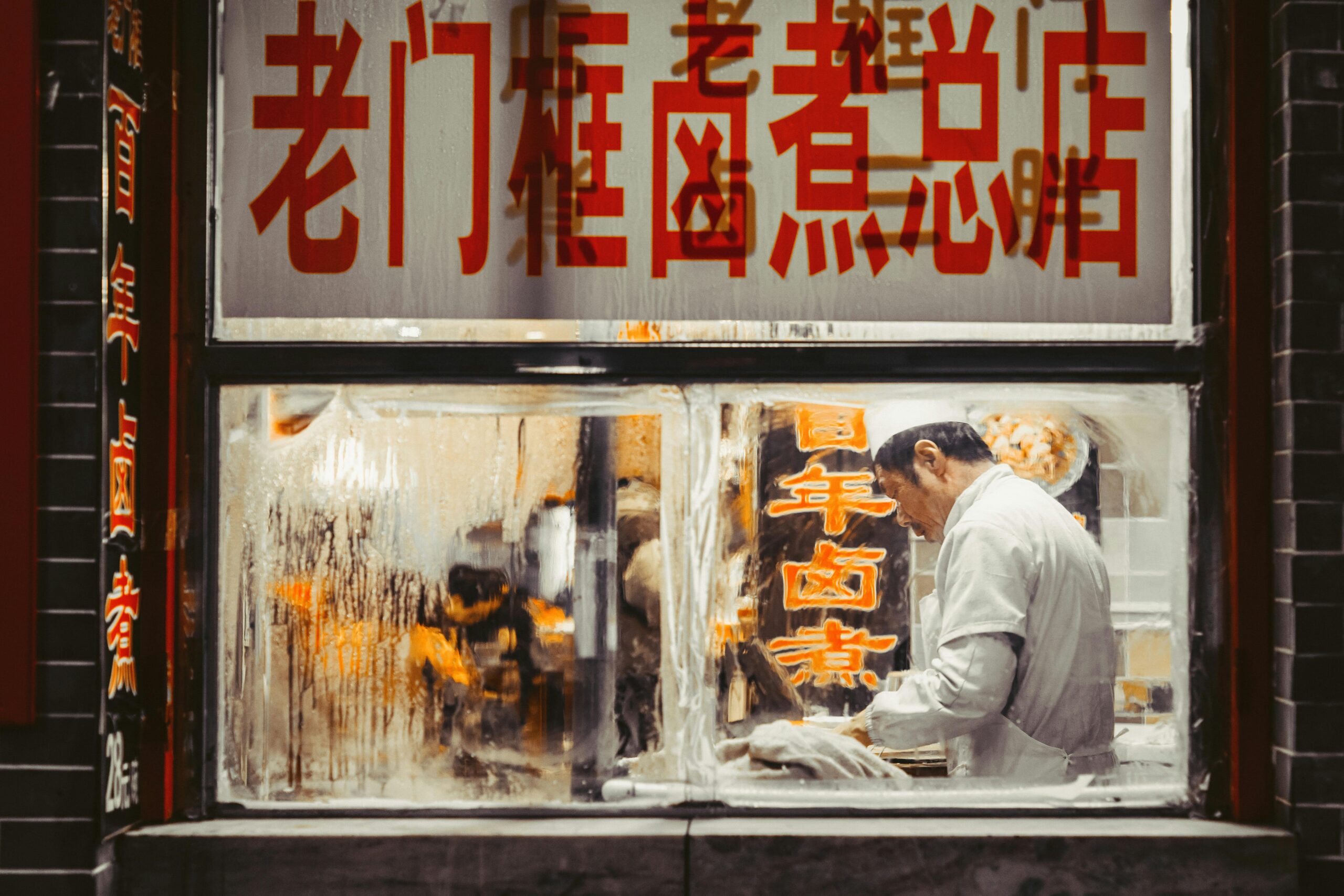
Beijing food is more than one famous duck dinner. The city’s table carries imperial memory, northern wheat traditions, Muslim influences, old neighborhood snacks, and practical meals for cold winters and busy workdays. A good Beijing food day should feel varied: one classic dish, one noodle or breakfast item, one snack, and one slow meal.

Quick answer: what to try first
Start with Peking duck, zhajiangmian, jiaozi, hotpot or shuan yang rou, douzhi if you are curious, hawthorn sweets, sesame paste snacks, and a breakfast stop with buns or pancakes. You do not need to eat everything in one day. Beijing food is easier to enjoy when you give each meal a job.
Peking duck without the pressure
Peking duck is famous for crisp skin, thin pancakes, scallion, cucumber, and sweet bean sauce. The best experience is not only the duck itself, but the rhythm of wrapping, sharing, and comparing textures. If you are eating with a small group, order side dishes so the meal does not become too rich. Book ahead for famous restaurants, but remember that many less-hyped places can still offer a satisfying meal.
Noodles, dumplings, and northern wheat comfort
Beijing sits firmly in northern wheat culture. Zhajiangmian, dumplings, pancakes, buns, and flatbreads all show that side of the city. Zhajiangmian is especially useful for visitors because it is simple, filling, and connected to everyday life. Mix the sauce well, taste before adding extra seasoning, and enjoy the contrast between noodles, bean paste, and vegetables.
Hotpot and winter meals
Shuan yang rou, or Beijing-style lamb hotpot, is a classic cold-weather meal. Thin lamb slices cook quickly in a copper pot, then meet sesame sauce, herbs, and small sides. It is social food, not a rushed stop. If the day has been built around the Forbidden City, hutongs, or the Great Wall, a warm shared dinner makes the route feel complete.
Snacks and breakfast
Beijing snacks can be playful, old-fashioned, or challenging. Hawthorn sweets are easy for most visitors. Douzhi is famous but sour and not universally loved. Breakfast is often a better doorway: buns, soy milk, pancakes, eggs, and small shops show the city waking up. Choose busy places, keep expectations flexible, and try one unfamiliar item at a time.
Keep reading
Turn the meal into a wider route with our Beijing first visit guide, Beijing souvenir guide, and Beijing travel checklist.
How locals pace a Beijing food day
Beijing food makes more sense when you spread it across the day. Breakfast can be simple and fast: buns, pancakes, eggs, soy milk, or noodles. Lunch can be practical near a museum, hutong, or office district. Dinner is the better time for duck, hotpot, or a shared table. Snacks fit between walks, not as a separate mission.
This pacing matters because Beijing sightseeing can be physically large. A visitor who tries to eat every famous food in one afternoon will remember fullness more than flavor. Choose a few strong meals and let the city sit between them.
How to choose restaurants
Look for clear turnover, clean tables, and dishes that match the restaurant’s identity. A noodle shop should be good at noodles. A duck restaurant should be confident about duck. A snack stall should move quickly and serve food hot. Famous names can be worthwhile, but neighborhood places often reveal daily Beijing more honestly. If you cannot read the full menu, start with one signature dish and one vegetable or soup to balance the table.
Food etiquette and comfort
At shared meals, let the host or group set the pace. Use serving chopsticks when provided, avoid wasting food, and ask before ordering very strong dishes for everyone. If you have dietary limits, say so clearly at the beginning rather than after the dishes arrive. Beijing restaurants are used to many kinds of visitors, but clear communication still makes meals smoother.
A useful first-timer combination
For a first Beijing food day, try a breakfast pancake or bun, zhajiangmian for lunch, hawthorn or a small snack in the afternoon, and duck or hotpot for dinner. This gives you daily food, classic food, snack culture, and a shared meal without overloading one sitting.