-e1742971339568.png)
Quick answer: A good China travel photography walk is not a list of poses. It is a short route with one landmark, one human-scale street, one food or market detail, one quiet pause, and enough time for light and local movement. The goal is to photograph how a place feels, not just prove that you stood there.
Start with one neighborhood, not a whole city
The biggest mistake is trying to photograph too many famous places in one day. China rewards slower walking. In Beijing, a better photo walk might pair a hutong lane, a temple gate, a red wall, and a simple noodle or tea stop. In Shanghai, try a lane neighborhood, a river view, a museum facade, and evening street lights. In Chengdu, build around teahouse rhythm, park life, and food steam instead of only landmarks.
Keep the route small enough that you can repeat a street, wait for weather, or change angle without rushing. A two-hour walk with attention usually produces better photographs than an eight-stop checklist.
Use light as the route structure
Morning is good for gates, parks, old lanes, and markets before the crowd thickens. Late afternoon works well for walls, bridges, shopfronts, and faces in softer light. Evening is strongest in cities with neon, riverside reflections, food streets, or metro exits. Midday can still work, but use it for interiors, shaded alleys, details, signs, and texture rather than wide harsh scenes.
Plan one backup indoor or covered stop. Rain can make stone lanes, umbrellas, taxi lights, and food stalls more interesting, but only if your route gives you shelter and time.
What to photograph besides landmarks
Look for details that make the scene specifically Chinese and specifically local: rooflines, red walls, carved doors, tiled eaves, steamed baskets, tea cups, bilingual signs, delivery bikes, metro exits, old trees, public benches, chess tables, incense smoke, and the way people queue or pause. These small scenes often carry more memory than a crowded viewing platform.
Use three shot types for each stop: a wide frame for context, a medium frame for rhythm, and a detail frame for texture. For example, at a temple area you might photograph the entrance from across the street, then the movement of visitors near the gate, then a close detail of stone, wood, or shadow.
Respect matters more than the shot
Photography can turn rude quickly in busy Chinese cities. Do not block narrow hutong lanes, temple paths, metro exits, shop doors, or food queues. Avoid close portraits of strangers unless you have permission or clear distance. In religious, memorial, government, or security-sensitive areas, follow posted rules and put the camera away when staff ask.
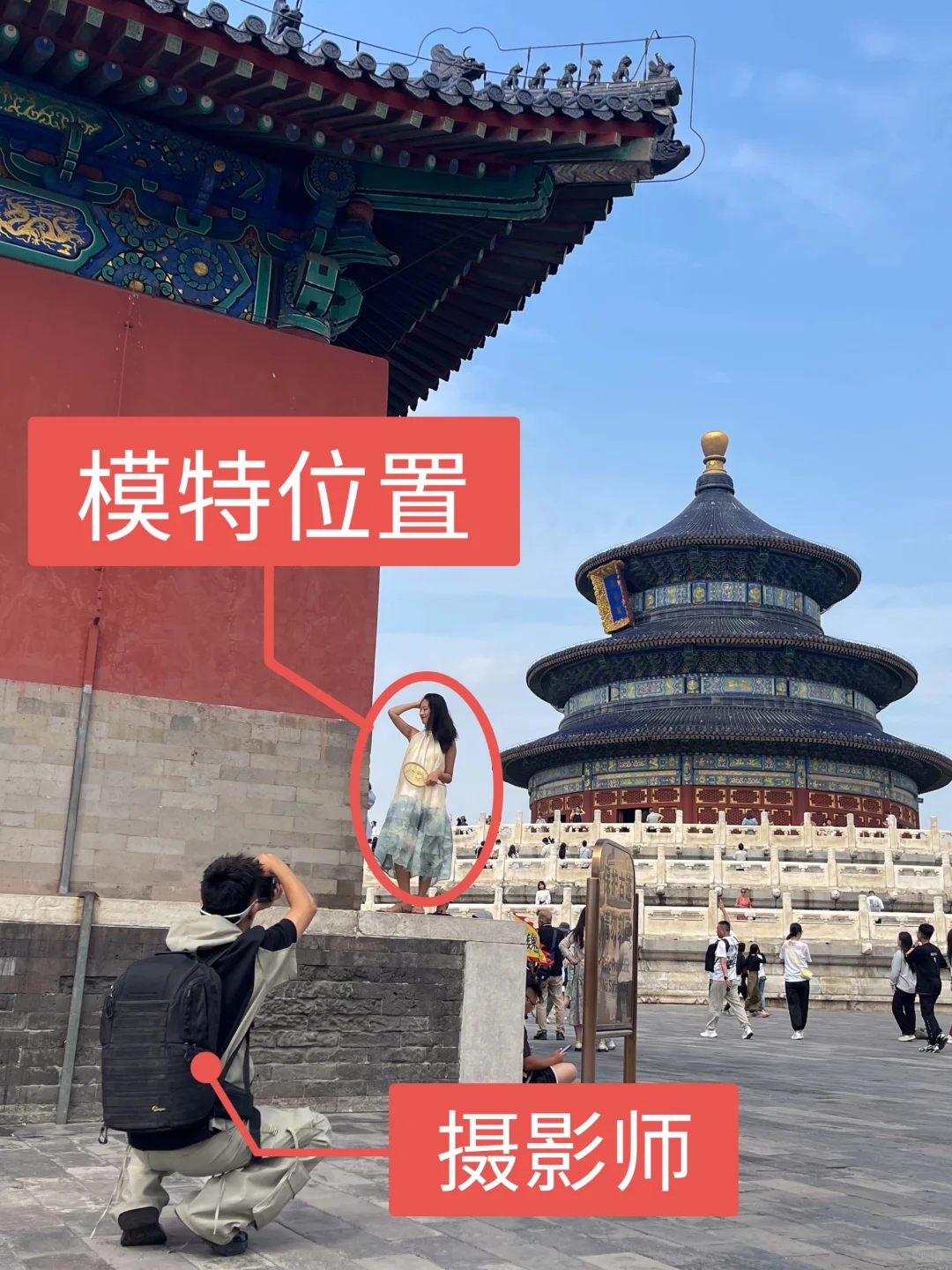
Be especially careful with staged costume shoots in crowded heritage sites. Some popular parks and cultural places have tightened rules around commercial-style photography because it disrupts normal visitors. If the scene needs a crew, reflectors, repeated posing, or blocked walkways, it probably does not belong in a casual travel walk.
A simple two-hour China photo walk template
- Stop 1: context landmark. Choose one gate, bridge, river view, temple exterior, museum facade, or historic street entrance.
- Stop 2: daily-life street. Walk slowly through a nearby lane, food street, park edge, or residential shopping street.
- Stop 3: texture break. Photograph signs, tiles, baskets, tea, trees, shadows, or public seating.
- Stop 4: evening or weather moment. End with softer light, reflections, lamps, or a quieter viewpoint.
This structure works because it gives the reader a real route decision. It also keeps the page useful whether the traveler is carrying a phone, compact camera, or mirrorless kit.
How to keep the walk lightweight
Bring comfortable shoes, a battery pack, a small cloth for rain, and only the lens or phone setup you will actually use. Heavy gear can make you less patient and more intrusive. Save locations offline if you are not sure about mobile data, and keep payment and transport backup ready for the end of the walk.
Most importantly, leave room for surprise. The best China photo walks often come from a side street, a vendor’s steam, a quiet tree, or a moment of public life that was not in the plan.