-e1742971339568.png)
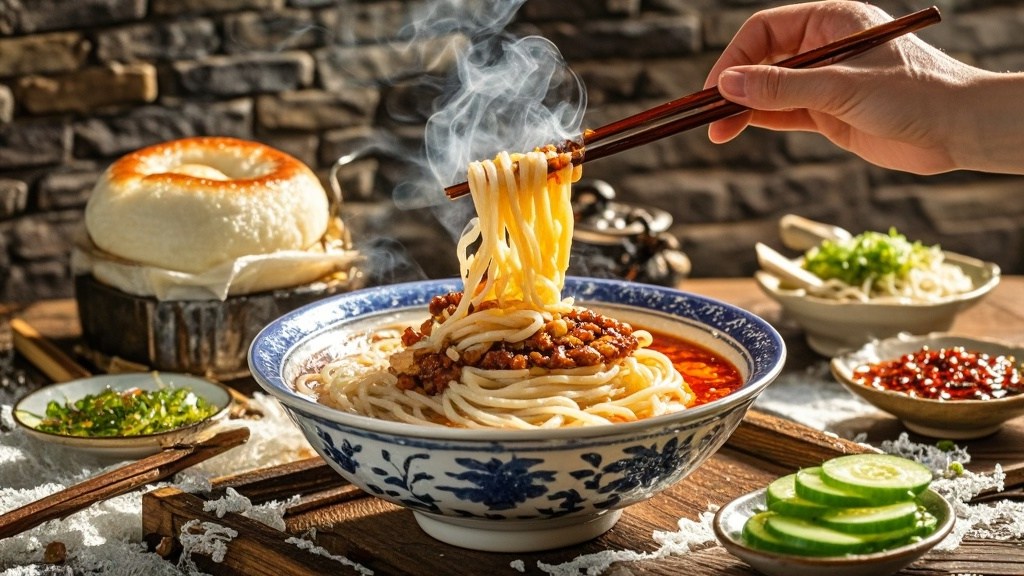
Xi’an food is bold, wheat-based, aromatic, and deeply tied to Shaanxi’s geography and history. Do not reduce it to one night in the Muslim Quarter. A good Xi’an food day mixes noodles, bread, soup, cold dishes, and small snacks with enough walking time between them.



Start with roujiamo
Roujiamo is often described as a Chinese burger, but that shortcut misses the bread. The bun should be firm enough to hold chopped meat and juices without collapsing. Try it as a snack or quick lunch, not as a full food tour by itself.
Biangbiang noodles
These wide noodles are famous for their dramatic name and texture. The best part is the chew: broad sheets of wheat noodle with chili, vinegar, garlic, vegetables, and sometimes meat. Mix well before eating so the seasoning coats each ribbon.
Liangpi and hot-cold balance
Liangpi is cold skin noodles, often bright with vinegar, chili oil, cucumber, and gluten pieces. It is especially useful in warm weather or between heavier foods. Pairing liangpi with roujiamo is a classic small-meal combination.
Paomo and soup dishes
Yangrou paomo asks diners to break bread into a bowl before broth and lamb are added. It is slow, filling, and more ritual-like than a quick snack. Choose it when you have time to sit, not when rushing to a museum entry slot.
Muslim Quarter: useful but not the whole city
The Muslim Quarter is atmospheric, busy, and convenient, but it is also tourist-heavy. Go for energy and variety, then try neighborhood noodle shops elsewhere. The goal is not to avoid famous areas; it is to avoid thinking one street equals all of Xi’an food.
What to try first
- Roujiamo plus liangpi for a fast introduction.
- Biangbiang noodles for texture and chili-vinegar flavor.
- Paomo for a slower sit-down meal.
- Persimmon cakes or nut sweets if you want something sweet.
- Skewers or breads if you are walking at night.
Related ChinaWink reads
For broader first-trip planning, start with the visitor guide and compare city routes in Destinations.
Keep exploring ChinaWink
For broader planning, use the China visitor guide, compare ideas in Destinations, or continue through Blogs.
How to pace a Xi’an food day
Start with one wheat-based breakfast or snack, then save noodles for lunch. Use the afternoon for walking the city wall, museums, or neighborhoods before choosing a heavier dinner. Xi’an food can be filling, so do not eat roujiamo, biangbiang noodles, paomo, and barbecue all within two hours unless you are sharing.
Spice and vinegar
Shaanxi flavor often uses chili oil and vinegar for brightness rather than only heat. If you are sensitive to spice, ask for less chili but keep some vinegar and garlic flavor where possible. The balance is part of what makes the cuisine distinctive.
Food near major sights
After the City Wall, choose a nearby noodle or roujiamo stop instead of crossing town immediately. Around the Bell Tower and Drum Tower, expect crowds but also convenient food access. After museums, keep the next meal simple because attention and walking can be tiring. Xi’an meals are best when they support the route rather than replacing it.
Ordering tip
If traveling with two or more people, order one noodle dish, one bread or bun item, one cold dish, and one soup or vegetable. Sharing creates a better introduction than each person ordering the same famous item.
How to eat Xi’an food with context
Xi’an food reflects Shaanxi wheat culture, old trade routes, Muslim Quarter flavors, and a love of strong textures. Roujiamo, biangbiang noodles, liangpi, paomo, and skewers are not random snacks. They tell a story of bread, noodles, lamb, chili, vinegar, and street energy. Try one wheat dish, one cold dish, and one soup or meat dish so the meal has range.
How to plan a Xi’an food walk
Start hungry but not desperate. Pick one noodle dish, one bread or meat item, and one cold or refreshing dish such as liangpi. This keeps the walk balanced. Xi’an portions can be filling, so share when possible and leave space for texture: chewy noodles, crisp bread, soft meat, cool noodles, and chili oil all play different roles.