-e1742971339568.png)
Introduction: A Close Encounter with Beijing Palace Art
When I first stepped into the Forbidden City, I knew I was about to witness more than just grand halls and majestic courtyards. What truly made my visit unforgettable was the breathtaking Beijing palace art hidden above — the stunning ancient architecture ceilings. One moment in particular left me speechless: when the warm sunlight filtered gently through the palace windows and hit the algae wells on the ceiling, creating a dazzling display that seemed to bring dragons soaring across the sky. It felt like catching a glimpse of ancient craftsmen’s passion and skill frozen in time, and I was utterly 惊艳.

This article is my personal travelogue and Beijing palace algae wells photography guide, sharing what I learned about these architectural marvels and the best ways to photograph and appreciate them. Whether you’re an avid photographer or simply curious about historical palace Beijing, I hope my story helps you experience the same sense of wonder.
Understanding Ancient Architecture Ceiling and Algae Wells
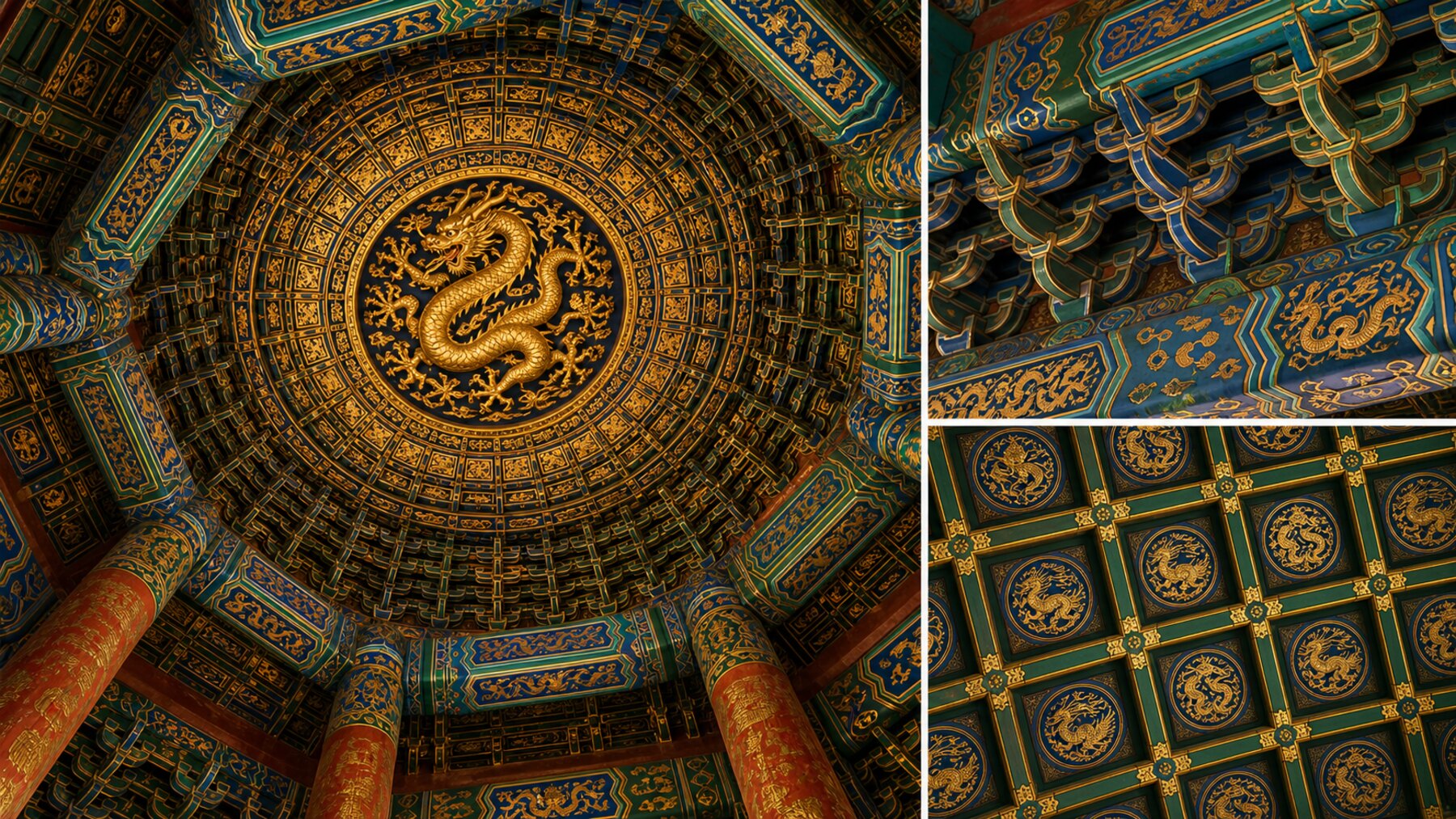
First, what exactly are algae wells? These intricate ceiling features, originally termed 藻井 in Chinese, are essentially ornate domes or recessed ceiling panels designed to symbolize the heavens. Dating back to imperial times, they were supported by small penthouse arches and richly decorated with colorful floral motifs, lacquered carvings, and sometimes vivid dragons.
Algae wells were reserved for the highest-status places—Emperor’s palaces, top-tier temples, and grand halls—making them a rare treasure of Chinese ancient architecture ceiling. The peak of the algae wells technique showcased an exquisite layering of meanings, from spiritual symbolism to social hierarchy. Golds, greens, and blues dominate their vibrant palette, emphasizing both opulence and elegance.
According to the Palace Museum official site, these ceilings were designed not just for aesthetics but also for acoustics and airflow, blending form and function into one seamless art form.
For me, understanding the meaning behind these ceilings deepened my appreciation during the visit and fueled my enthusiasm for capturing their beauty through photography.
My Chinese Palace Tour: Highlights of Algae Wells Photography
The sheer size of the Forbidden City can be overwhelming, and it’s easy to miss some hidden gems. My Chinese palace tour was planned around experiencing the algae wells under the best lighting conditions, and I discovered that time of day made a huge difference. The golden hour, when sunlight passes through side windows illuminating the ceiling, revealed the fullest grandeur of the algae wells — just like the Xiaohongshu posts I had read about.
I used a wide-angle lens as recommended by several Xiaohongshu users, which let me capture the expansive ceiling without losing detail. One challenge I encountered was that some algae wells couldn’t be photographed from directly beneath. The angles and supports meant I had to be creative with my positioning and movement around halls like the 芷筝厅 (Chiu-Teng Hall), 万春亭 (Wan Chun Pavilion), and 嘉彩厅 (Jia Cai Hall).
The experience was so much richer because of the layered history behind these spots, which you can explore further through our detailed Beijing Forbidden City Tour Guide. Pausing beneath the algae wells and imagining centuries of emperors and artisans’ presence made the place come alive in a unique way.
Best Tips for Beijing Palace Algae Wells Photography
If you’re visiting Beijing and want to do some algae wells photography, here are a few lessons I learned to make the most of your experience:
- Use a wide-angle lens: Algae wells are often vast, and a narrow lens will miss out on the grandeur. Wide-angle helps balance the intricate details and the overall composition.
- Shoot when sunlight filters through windows: The magic happens when direct light hits the algae wells, illuminating dragons and flowers on the ceiling. Plan your visit for mid-morning or late afternoon depending on the season.
- Respect the angles: Some algae wells cannot be photographed perfectly from below due to structural supports. Move around and experiment with side angles to get creative shots.
- Focus on the colors and textures: The gilt finish, lacquered layers, and embossed carvings create mesmerizing patterns—slowing down to appreciate these will enrich your shot.
These tips are based on both personal experience and the advice of expert photographers featured on Xiaohongshu. For more palace photography tips, check out our China Palaces Photography Tips article.
Recommended Itinerary: Exploring Historical Palace Beijing
When time is tight, I recommend prioritizing these three spots, which I found to be the best for witnessing the masterpiece of algae wells while enjoying pleasant lighting conditions:
- Chiu-Teng Hall (芷筝厅): One of the first places where the algae wells captivated me under the sun’s tender glow.
- Wan Chun Pavilion (万春亭): Known for its vibrant colors and the detailed dragon carvings soaring across the ceiling.
- Jia Cai Hall (嘉彩厅): Offers intricate layers of lacquer and painted floral patterns symbolizing prosperity.
These places provided the perfect settings for both visual enjoyment and photography. I also explored the surrounding gardens, where the tranquil atmosphere contrasts beautifully with the lavish palace interiors.
For an in-depth walk-through of these must-see locations, readers can explore Beijing Historical Palace Itinerary to plan a seamless visit.
Why These Ancient Ceilings Matter
The ceilings in Beijing’s palaces are not merely decorative; they are key to understanding the cultural, spiritual, and hierarchical values of the time. Each dragon, flower, and pattern was deliberately chosen and painted to communicate messages of power, heaven’s favor, and the divine right of the emperor. Witnessing the detailed workmanship of the historical palace Beijing ceilings gave me a closer connection to this legacy.
Beyond beauty, the algae wells also played a functional role in palace architecture—helping with air circulation and sound resonance. Their design was so significant that they remain treasured objects of study in architectural history and conservation today. Does this remind you of other ancient dome-like structures, such as the Great Dome in Western cathedral architecture?
Exploring this side of the palaces enriches any visitor’s journey, offering a glimpse into the genius of China’s ancient builders.
FAQs About Beijing Palace Art and Algae Wells
- What are algae wells and why are they important?
- Algae wells are intricate ceiling domes found in Chinese palaces, symbolizing the heavens and showcasing the peak of ancient architectural art and craftsmanship.
- When is the best time to photograph algae wells in Beijing’s palaces?
- The best time is during mid-morning or late afternoon when sunlight shines through palace windows and directly illuminates the algae wells.
- Can I photograph algae wells from directly below?
- Not always. Some algae wells have structural supports restricting vertical shots, so different angles and a wide-angle lens are recommended.
- Which halls in the Forbidden City have the best algae wells?
- Chiu-Teng Hall, Wan Chun Pavilion, and Jia Cai Hall are considered the highlights with the most exceptional algae wells.
- Are algae wells unique to Beijing’s palaces?
- While algae wells are prominent in Beijing’s imperial palaces, similar ceiling art can be found in other ancient Chinese temples and buildings with variations in style.
For those planning their journey, keep these insights in mind as you explore the beauty and depth of Beijing palace art. The delicate play of light on the algae wells truly brings history alive. If you’d like to dive deeper into palace architecture and travel tips, don’t miss our related articles here on chinawink.com.