-e1742971339568.png)
Food & Tea
Chinese Noodles: wheat, rice, hand-pulled, knife-cut, soup, and sauce.
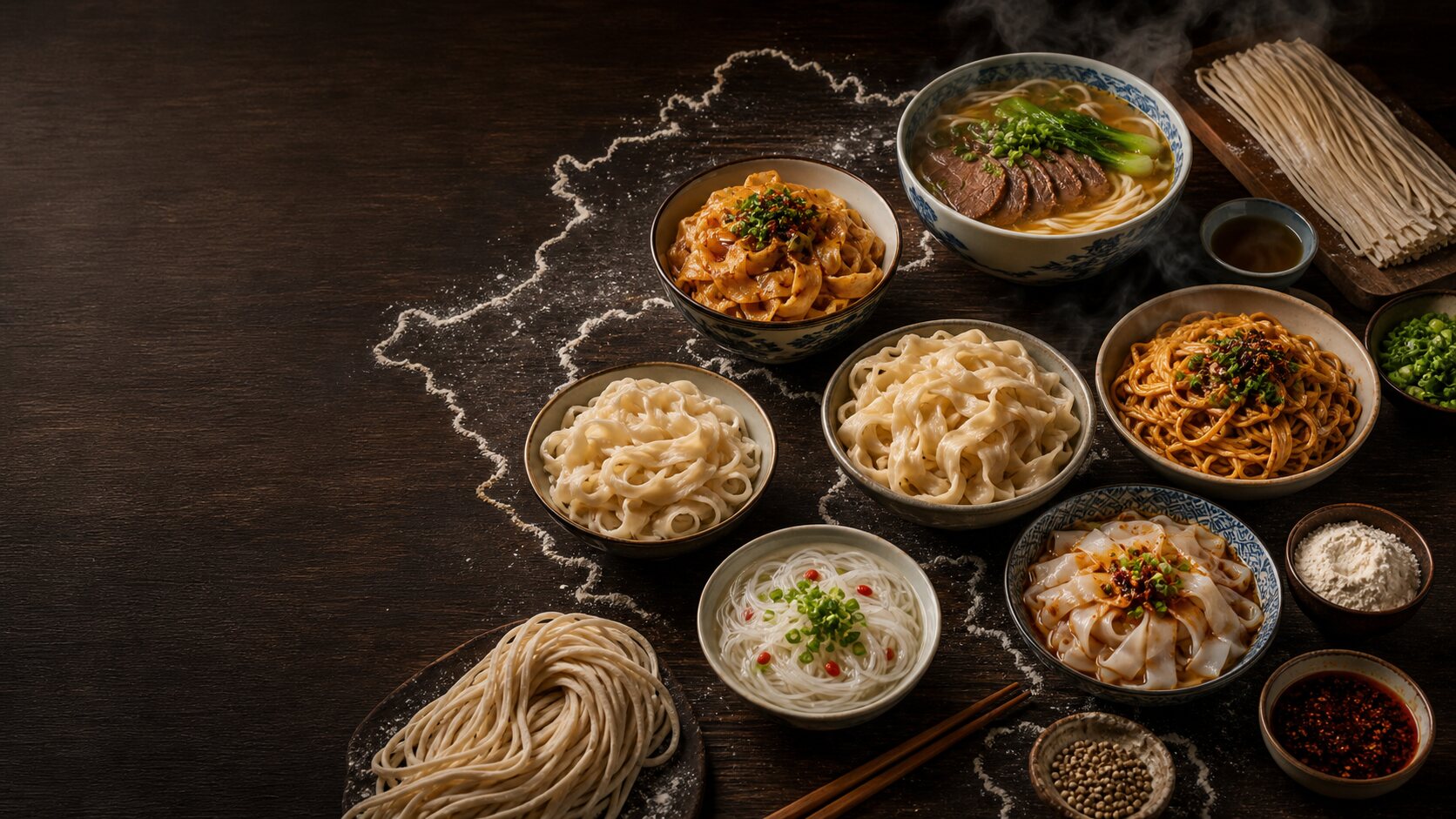
Chinese noodles are not one dish. They are a family of textures, grains, regions, broths, sauces, toppings, and making methods.
Shape
Thickness, width, curl, strand, sheet, or cut changes the dish.
Texture
Chewy, slippery, springy, soft, or knife-cut bite matters first.
Region
Wheat north, rice south, mountain bowls, and city breakfast habits vary widely.
Broth & Sauce
Clear soup, dry sauce, chili oil, sesame paste, and braise all read differently.
Hand-pulled
Lamian makes elasticity visible through stretching and folding.
Help readers understand Chinese noodle types and cultural context without becoming a recipe page.
Chinese noodles are not one dish. They are a family of textures, grains, regions, broths, sauces, toppings, and making methods.
Chinese discussions often compare regional noodle identity and why hand-pulled, knife-cut, rice, and wheat noodles feel so different.
Visual vocabulary
These are the visible clues the page should teach first, so the topic feels inspectable rather than abstract.
Chinese Noodles in four answers
A concise answer layer for readers and generative search systems before the deeper visual notes.
How to read it
Use these entry points to understand the object, food, or tradition as culture rather than as a disconnected fact.
Texture first
The noodle body often defines the dish before the topping does.
Region in a bowl
Lanzhou, Shanxi, Xi'an, Chongqing, Guilin, Yunnan, and many local styles use noodles differently.
Daily rhythm
Noodles can be breakfast, quick lunch, late-night comfort, ceremonial longevity food, or street snack.
What to notice
Do not judge Chinese noodles by one restaurant style.
Chew and sauce are often the point.
A noodle bowl can reveal climate, grain, and city routine.
Related places
City pages act as cultural containers, connecting this topic to places, scenes, and local rhythm.
 Chongqing
A place context for Chinese Noodles: streets, food, objects, architecture, and local rhythm.
Chongqing
A place context for Chinese Noodles: streets, food, objects, architecture, and local rhythm.
 Chengdu
A place context for Chinese Noodles: streets, food, objects, architecture, and local rhythm.
Chengdu
A place context for Chinese Noodles: streets, food, objects, architecture, and local rhythm.
 Yunnan
A place context for Chinese Noodles: streets, food, objects, architecture, and local rhythm.
Yunnan
A place context for Chinese Noodles: streets, food, objects, architecture, and local rhythm.
Continue with
Adjacent pages keep the reader moving through the content atlas instead of returning to a generic blog list.
Related stories from the library
All stories



Common questions
What are the main types of Chinese noodles?
Major families include wheat noodles, rice noodles, starch noodles, hand-pulled noodles, knife-cut noodles, soup noodles, dry noodles, and stir-fried noodles.
Are Chinese noodles always wheat-based?
No. Many regions use rice noodles or starch noodles, especially in southern and southwestern China.