-e1742971339568.png)
Food & Tea
Dim Sum and Yum Cha: tea, small plates, carts, and Cantonese social life.
Dim sum makes food social at small scale. Yum cha ties the meal to tea, timing, family tables, and Cantonese urban rhythm.
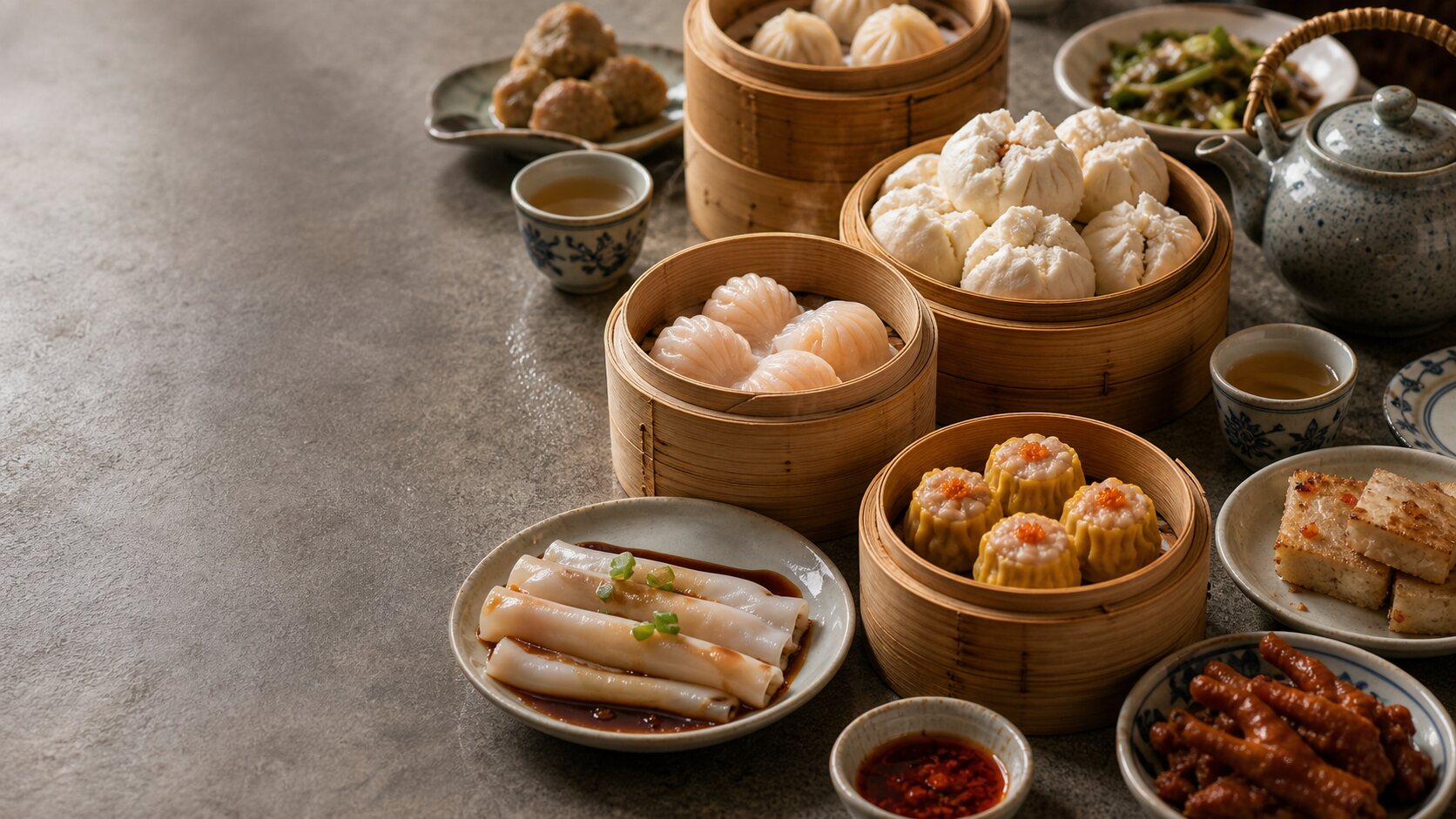
Tea House Rhythm
The meal moves by tea refill, small dishes, talk, and slow choice.
Basket Map
Bamboo steamers make the table modular and shareable.
Table Etiquette
Pouring tea, tapping thanks, sharing plates, and pacing shape the meal.
Cantonese Habit
Yum cha carries southern city life, elders, family gatherings, and weekend time.
Popular Dim Sum
Har gow, siu mai, char siu bao, cheung fun, and egg tarts anchor the visual field.
Difference and relationship between dim sum and yum cha, plus the cultural logic behind small dishes and tea.
Dim sum makes food social at small scale. Yum cha ties the meal to tea, timing, family tables, and Cantonese urban rhythm.
Chinese readers ask why it is called morning tea, why tea and dishes belong together, and how Cantonese teahouse culture works.
Visual vocabulary
These are the visible clues the page should teach first, so the topic feels inspectable rather than abstract.
Dim Sum and Yum Cha in four answers
A concise answer layer for readers and generative search systems before the deeper visual notes.
How to read it
Use these entry points to understand the object, food, or tradition as culture rather than as a disconnected fact.
Tea first
Yum cha reminds readers that tea is not a side detail. It organizes the meal.
Small dishes, long table
Dim sum supports grazing, conversation, and family-style choice rather than one plated course.
Cantonese city rhythm
Morning tea and weekend dim sum connect restaurants, elders, children, business talk, and neighborhood routine.
What to notice
Dim sum is food; yum cha is the tea-drinking social practice around it.
The meal is about pacing as much as taste.
Guangzhou and Hong Kong shaped much of the global image.
Related places
City pages act as cultural containers, connecting this topic to places, scenes, and local rhythm.
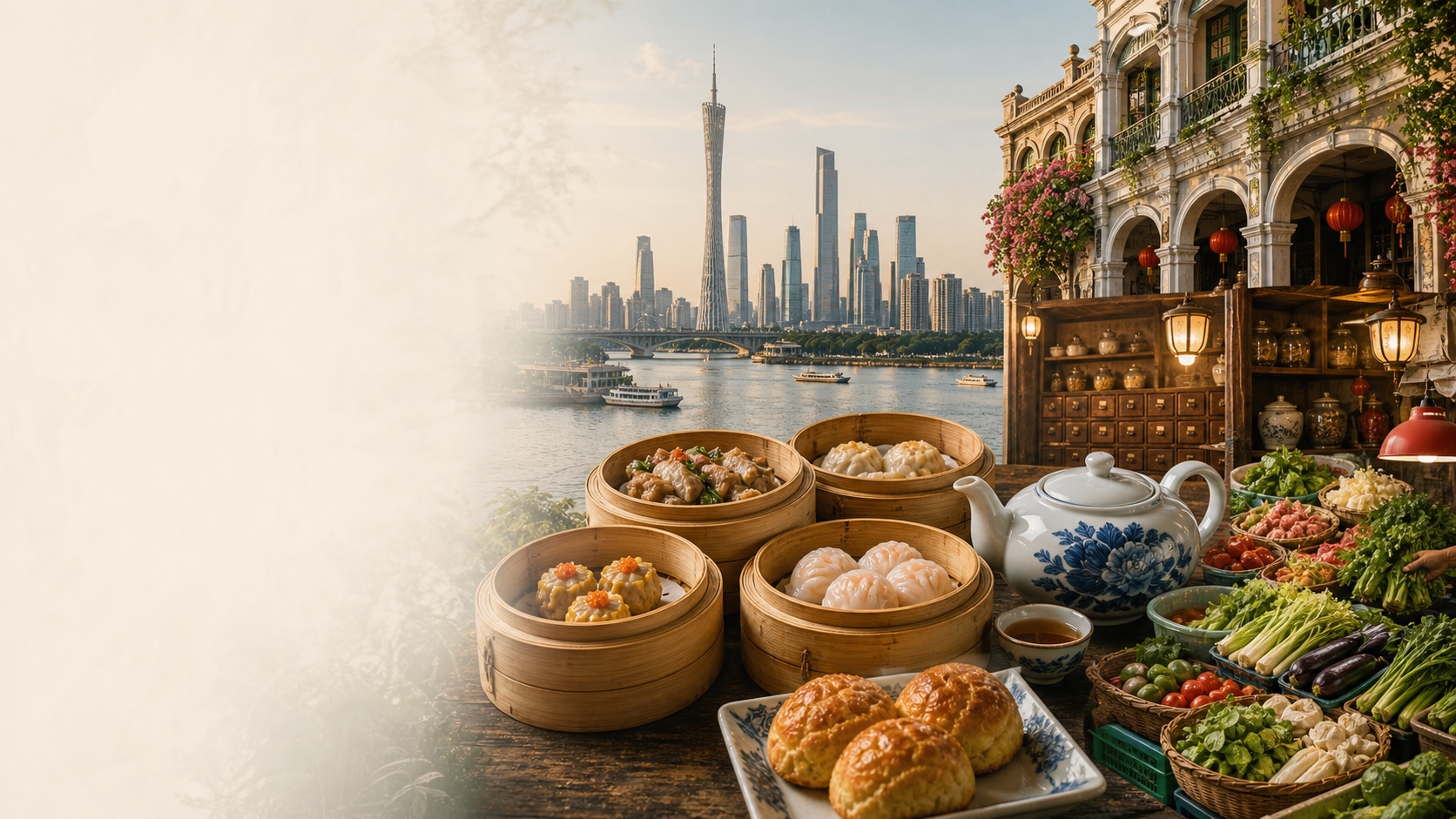 Guangzhou
A place context for Dim Sum and Yum Cha: streets, food, objects, architecture, and local rhythm.
Guangzhou
A place context for Dim Sum and Yum Cha: streets, food, objects, architecture, and local rhythm.
 Shanghai
A place context for Dim Sum and Yum Cha: streets, food, objects, architecture, and local rhythm.
Shanghai
A place context for Dim Sum and Yum Cha: streets, food, objects, architecture, and local rhythm.
 Chengdu
A place context for Dim Sum and Yum Cha: streets, food, objects, architecture, and local rhythm.
Chengdu
A place context for Dim Sum and Yum Cha: streets, food, objects, architecture, and local rhythm.
Continue with
Adjacent pages keep the reader moving through the content atlas instead of returning to a generic blog list.
Related stories from the library
All stories

Common questions
Are dim sum and yum cha the same?
Not exactly. Dim sum refers to the small dishes; yum cha refers to drinking tea and the social meal built around it.
Why is tea important with dim sum?
Tea balances rich dishes, structures the gathering, and gives the meal its Cantonese social rhythm.