-e1742971339568.png)
Craft & Finds
Yixing Teapot: clay, tea memory, and the quiet skill of a small vessel.
A Yixing teapot is not just tea ware. It is clay, hand feel, brewing habit, and a long conversation between vessel and leaf.
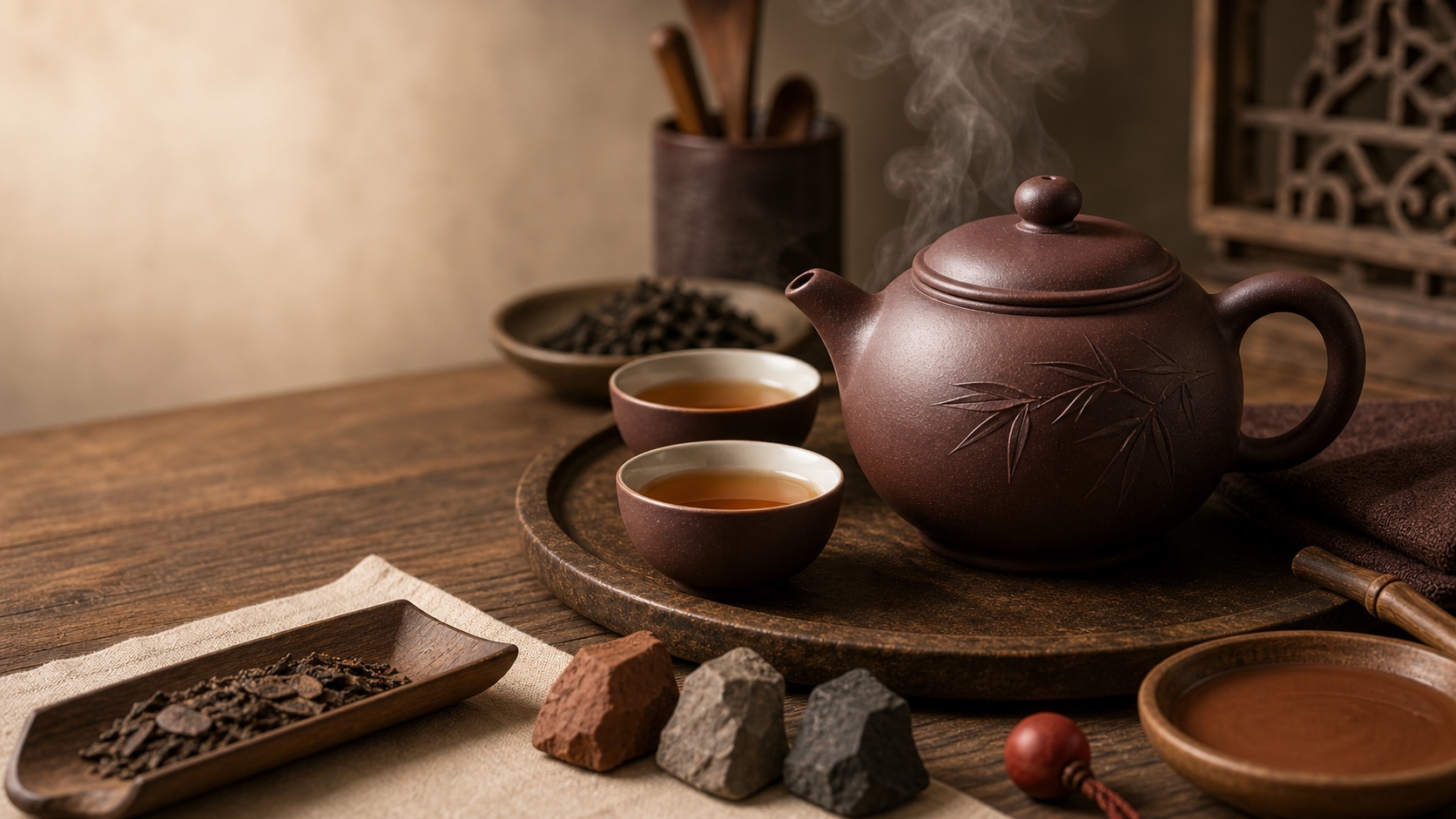
Zisha Clay
Texture, porosity, color, and heat behavior shape the vessel.
Form
Body, spout, handle, lid, and knob should feel like one sentence.
Pour
Function is part of beauty; the pot is a tool before a collectible.
Patina
Use and care slowly change the surface and memory of the pot.
Tea Link
Repeated brewing connects vessel, leaf, water, and habit.
Why Yixing teapots matter, what zisha clay is, and how beginners can notice quality without falling into collector myths.
A Yixing teapot is not just tea ware. It is clay, hand feel, brewing habit, and a long conversation between vessel and leaf.
Chinese questions focus on clay quality, fake pots, shine, smoothness, and how a beginner can judge without being fooled.
Visual vocabulary
These are the visible clues the page should teach first, so the topic feels inspectable rather than abstract.
Yixing Teapot in four answers
A concise answer layer for readers and generative search systems before the deeper visual notes.
How to read it
Use these entry points to understand the object, food, or tradition as culture rather than as a disconnected fact.
Clay before decoration
The beauty of Yixing often lives in the body of the clay and the discipline of the form, not in surface ornament.
Small scale, serious control
Lid, knob, shoulder, body, handle, and spout must feel like one sentence.
Use creates memory
A pot becomes meaningful through repeated brewing, touch, rinsing, drying, and slow familiarity.
What to notice
Check whether the lid and body feel proportionate.
Look for natural clay texture rather than plastic shine.
Think of the pot as a tool first and a collectible second.
Related places
City pages act as cultural containers, connecting this topic to places, scenes, and local rhythm.



Continue with
Adjacent pages keep the reader moving through the content atlas instead of returning to a generic blog list.
Related stories from the library
All stories


Common questions
What makes a Yixing teapot special?
Its clay, hand-built structure, heat behavior, and relationship with repeated tea brewing make it culturally distinctive.
Should beginners buy rare clay claims?
No. Beginners should first learn shape, pour, lid fit, clay feel, and reliable sourcing before chasing rare labels.